

 Knowledge centre Rocol Experts
The Evolution of Mould Release Agents in Modern Manufacturing
In modern manufacturing, certain supporting products have become so integrated into routine operations that their strategic importance can be overlooked. Mould release agents are a prime example. While often seen as simple consumables, they are instrumental in determining the quality, efficiency, and consistency of moulded outputs.
- Share
-

-

-

-

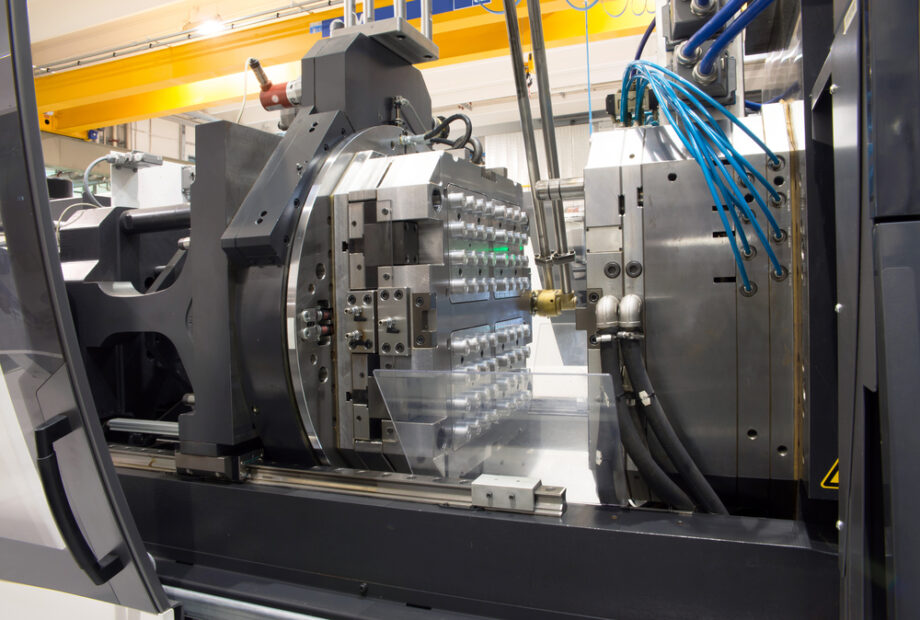
As manufacturing processes become more advanced and regulatory expectations grow, the function and performance of mould release agents are being reevaluated, evolving from basic utility items to key enablers of production reliability and compliance.
Far from being simple silicone sprays used indiscriminately across the shop floor, today’s mould release agents are tailored, compliant, and increasingly sophisticated. Their transformation tells a broader story about how industrial maintenance is adapting to the complex demands of 21st-century manufacturing.
The Rise of Injection Moulding as a Critical Industry Driver
Injection moulding has surged as the preferred method for producing high-precision, high-volume plastic components. Its reach spans sectors as diverse as automotive, consumer electronics, medical devices, and food packaging. As the complexity of parts increases, so too does the importance of reliable, residue-free release agents.
In particular, manufacturers now require mould release agents that can:
- Support faster cycle times without compromising surface finish
- Operate at wider temperature ranges to accommodate high-performance polymers
- Work within regulated environments, especially in food and pharma
These demands are reshaping expectations and pushing product development in new directions.
From Utility Product to Performance Enabler
Historically, silicone sprays were seen as utility items: cheap, effective, and widely available. Market leading brands built their reputations by providing dependable products for general use. However, as safety and sustainability have come to the forefront, manufacturers are asking more from their sprays.
Three major trends are driving this evolution:
1. Increased Regulatory Scrutiny
Modern moulding environments are often subject to multiple overlapping safety and hygiene standards. In food processing, for instance, the requirement for NSF H1 certification is now a minimum baseline. In pharmaceuticals, ISO 21469 and cleanroom compatibility may also be required.
Mould release agents must now not only perform effectively, but also be non-toxic, residue-free, and formulated without harmful solvents, animal derivatives, or allergens. This has raised the bar considerably for product developers.
2. Automation and Downtime Sensitivity
As production lines become more automated and throughput increases, unscheduled downtime becomes more costly. Inferior release agents that require frequent reapplication or cause part sticking can be a hidden liability. Today’s users demand:
- Longer-lasting films: These reduce the frequency of maintenance interventions, cutting labour costs by limiting the number of technician visits required per shift or cycle. For example, switching from a low-durability spray requiring reapplication every 20 moulding cycles to a high-performance film lasting 60 cycles can reduce intervention time by up to 66%, freeing up labour hours for higher-value tasks. Additionally, less frequent application minimises production disruption, supports leaner shift scheduling, and reduces aerosol consumption—lowering total cost of ownership while contributing to sustainability targets.
- Consistent application through precision spray systems: Precision spray delivery ensures that the correct amount of release agent is applied uniformly across every mould surface, reducing variability between cycles. This consistency directly improves product quality by avoiding over- or under-lubrication, which can lead to defects or sticking. Moreover, it shortens setup and adjustment time between runs, supports shorter cycle times, and enables more predictable maintenance scheduling. Over hundreds or thousands of cycles, this can translate into substantial labour savings and productivity gains. For example, consistent application over 1,000 cycles might eliminate the need for mid-run adjustments or re-coating, potentially saving several technician hours per week.
- Multi-angle usability for complex tooling: In today’s production environments, moulds are not always positioned in ideal orientations. Maintenance sprays must accommodate hard-to-reach areas without requiring tool disassembly or awkward manual adjustments. A spray capable of 360-degree application dramatically reduces downtime during lubrication or release agent application. Operators can service equipment faster, more safely, and with greater accuracy—especially in confined or overhead spaces. This feature helps minimise line stoppages and reduces the need for repositioning or rotating equipment, further lowering labour costs and supporting safer working conditions. When applied across hundreds of cycles, the cumulative time saved can represent several hours per week, boosting throughput and freeing up technician capacity for more value-added tasks.
The goal is to integrate seamlessly into modern workflows and reduce intervention frequency.
3. Environmental and Supply Chain Pressures
Sustainability is no longer a “nice to have”. Manufacturers are being held accountable for reducing waste, especially in single-use consumables like aerosols. This has led to the adoption of:
- Metal-detectable plastic components to prevent contamination: In food and pharmaceutical manufacturing environments, even the smallest fragments of foreign material can trigger costly recalls or production halts. Incorporating metal-detectable actuators and caps into aerosol sprays adds an extra layer of protection. If a component were to break off and enter the production line, it could be immediately identified by standard metal detection systems—avoiding contamination and ensuring compliance with HACCP protocols. This feature not only improves product safety but also minimises the risk of financial and reputational damage associated with quality control failures. It reduces the time and resources spent on manual inspections, contributing to overall efficiency and peace of mind.
These changes reflect broader pressures in the industrial chemicals sector and show that even minor tools are being re-evaluated through a sustainability lens.
The Shift from Price to Value in Buyer Mindsets
Historically, procurement decisions around mould release agents were price-driven. But as manufacturers adopt total cost of ownership models, decision-making is evolving. Maintenance engineers and operations managers now evaluate sprays based on:
- Frequency of reapplication (labour and downtime costs)
- Risk of contamination or non-compliance
- Performance across multiple use cases (e.g. lubrication + mould release + anti-stick)
This creates space for high-end products that cost more per can but save considerably over time. One example is ROCOL’s new ULTIMATE Silicone Spray, designed for both performance and safety in sensitive manufacturing environments. With features like a 360-degree spray valve, metal-detectable components, and a finely atomised long-range spray, it reflects the direction the market is heading.
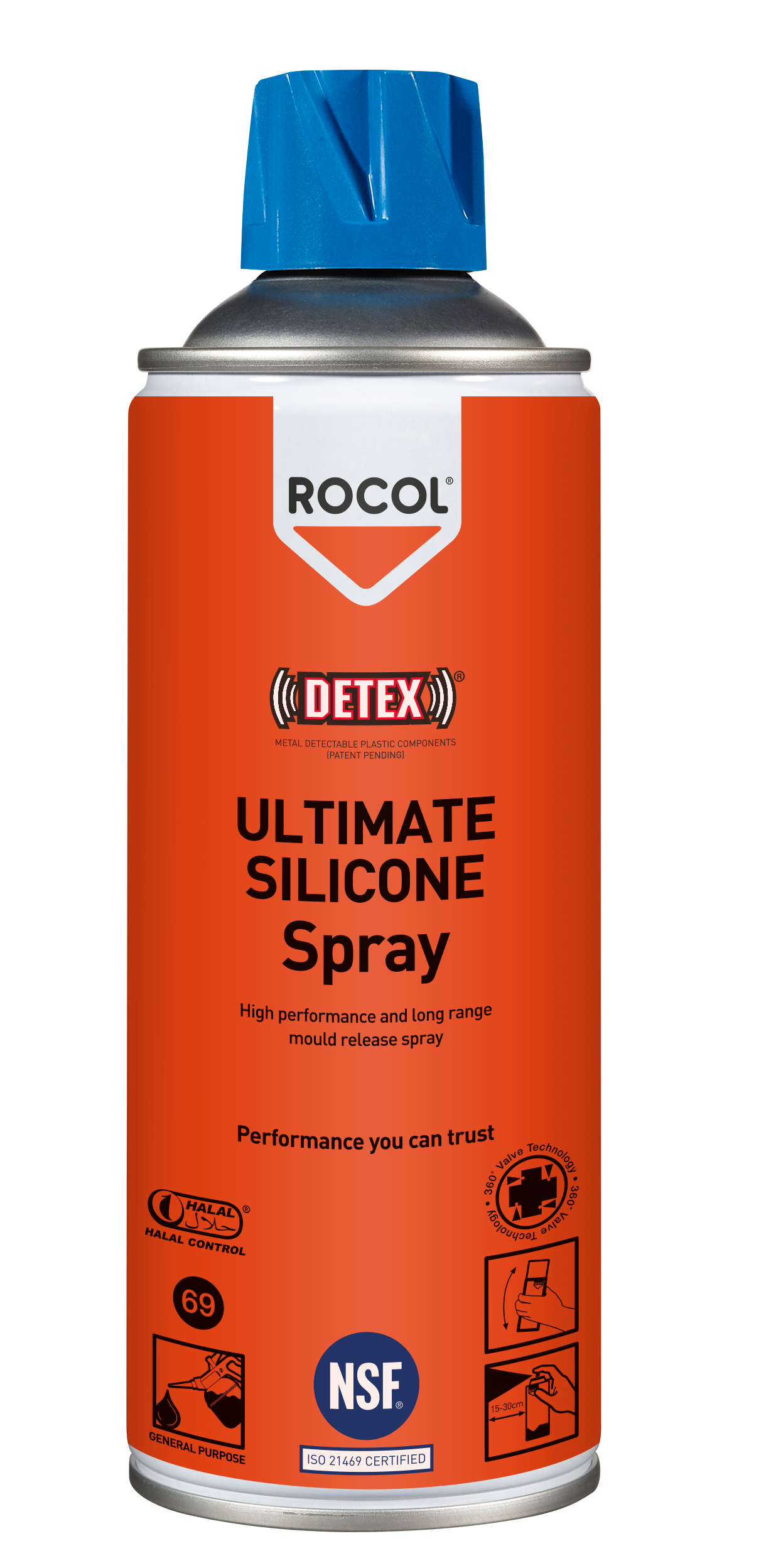
ULTIMATE SILICONE Spray
A high performance, non-toxic silicone spray for use in a wide range of industrial applications and particularly as a mould release agent.